
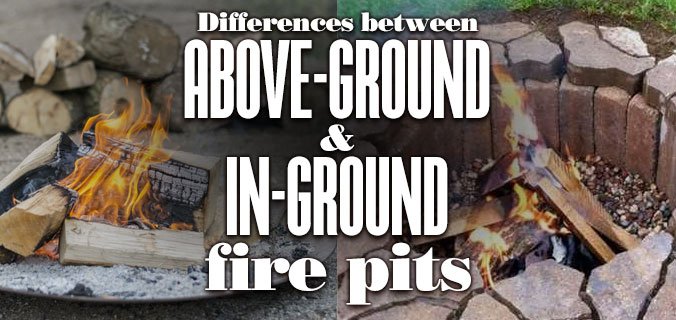
When it comes to patio fire pits, there are two main types: Above-ground and in-ground. The differences between Above-Ground and In-Ground Fire Pits can seem confusing at first, but we’re going to break them down for you below!
Fire pits are becoming popular in outdoor spaces. Having a fire pit in your garden makes it the most used part of your home. Some people prefer to have their outdoor gatherings around a fire pit instead of sitting among flower beds. If you have an above-ground fire pit or an in-ground fire pit, your outdoor experience is going to reach a whole new level. Below are the most important differences between above-ground and in-ground fire pits.
Above-Ground Fire Pits
An above-ground fire pit provides a focal point for your yard. Wood burning fire pits and gas fire pits are both popular options. With an above-ground fire pit, you can enjoy being outdoors in the winter. Fire pits come in many sizes, shapes, and styles. Since the tiles are exposed to high temperatures, you should choose one rated for outdoor use.
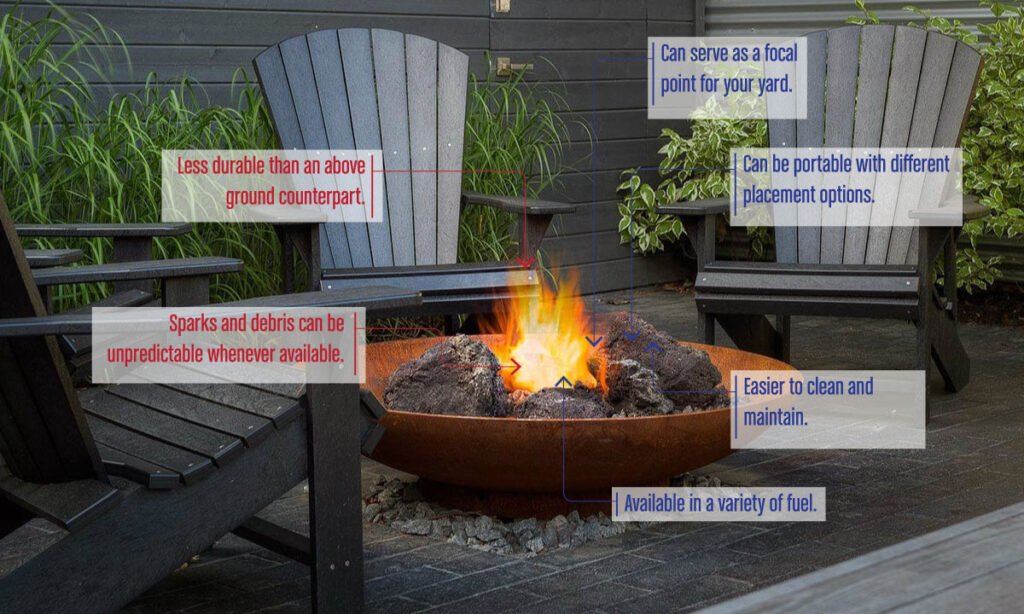 Above-ground and in-ground fire pits each have their unique benefits. Portable fire pits can extend your family’s enjoyment of fires to another outdoor destination besides your yard. Fire pits can be built into patios, which makes them easier to find a place for. Built-in fire pits create an irresistible outdoor ambiance that increases the amount of time spent with friends and family.
When locating a pit, one of the most important rules is to place it at least 10 feet from your home and the neighbors’ property. A fire pit should not have branches above it or combustible structures nearby. Fire pits are regulated, so make sure any installed fire pit is allowed by your community.
[su_note note_color=”#e4fc6b” radius=”7″]If you want to create an above-ground fire pit, we’ve a complete guide for you.[/su_note]
In-Ground Fire Pits
The primary difference between an above-ground fire pit and an in-ground fire pit is where the flames are located. In-ground fire pits are dug below ground level. Out-of-control fires are less likely to spread in a sunken fire pit, making these pits safer than above ground. Fires in underground pits are less likely to ignite combustibles nearby. In addition to posing a risk of burning through the flooring, in-ground pits can be dangerous for children and pets if they are not properly covered. These vulnerable ones can easily stumble into a fire pit and should, therefore, be watched closely during and after fires.
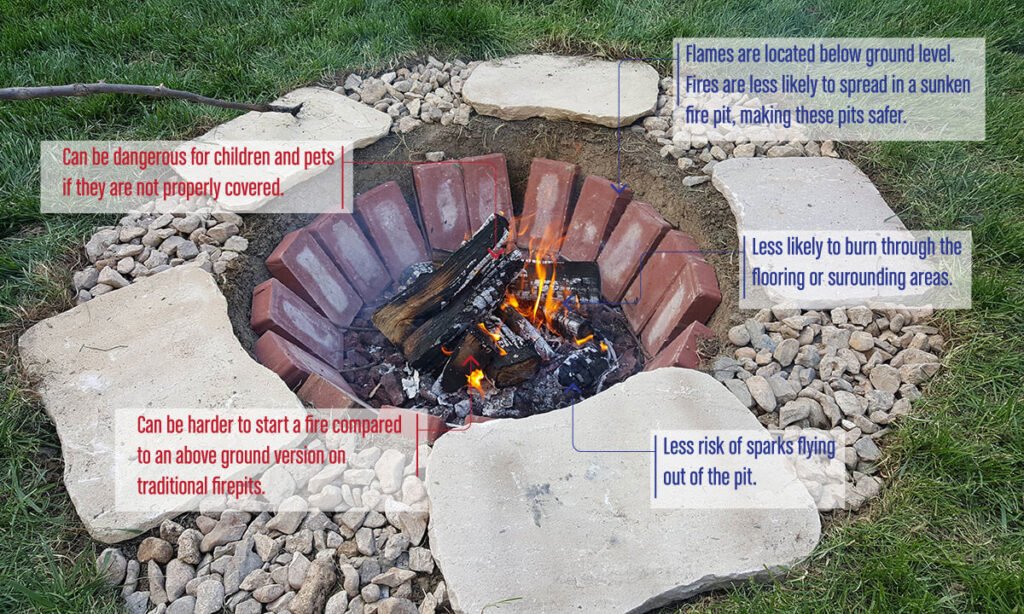 Compared to above-ground fire pits, in-ground fire pits are smaller in diameter. Fires, both in-ground and above-ground, are naturally smaller due to the surrounding materials. Additionally, there will be less risk of sparks flying out of the pit if it is in-ground.
An in-ground fire pit’s defining feature is its simplicity. You can dig a hole at any safe distance from other structures and put rocks on the bottom. In-ground fire pits have a few different options. They can be built into your outdoor patio using fire-rated materials.
Frequently Asked Question
Are in-ground fire pits better?
Ground fire pits are safer since they are smaller and contain more flames than an above-ground fire pit. However, they are also simpler to slip into, so you must be cautious when multiple children are around.



Comments are closed.